

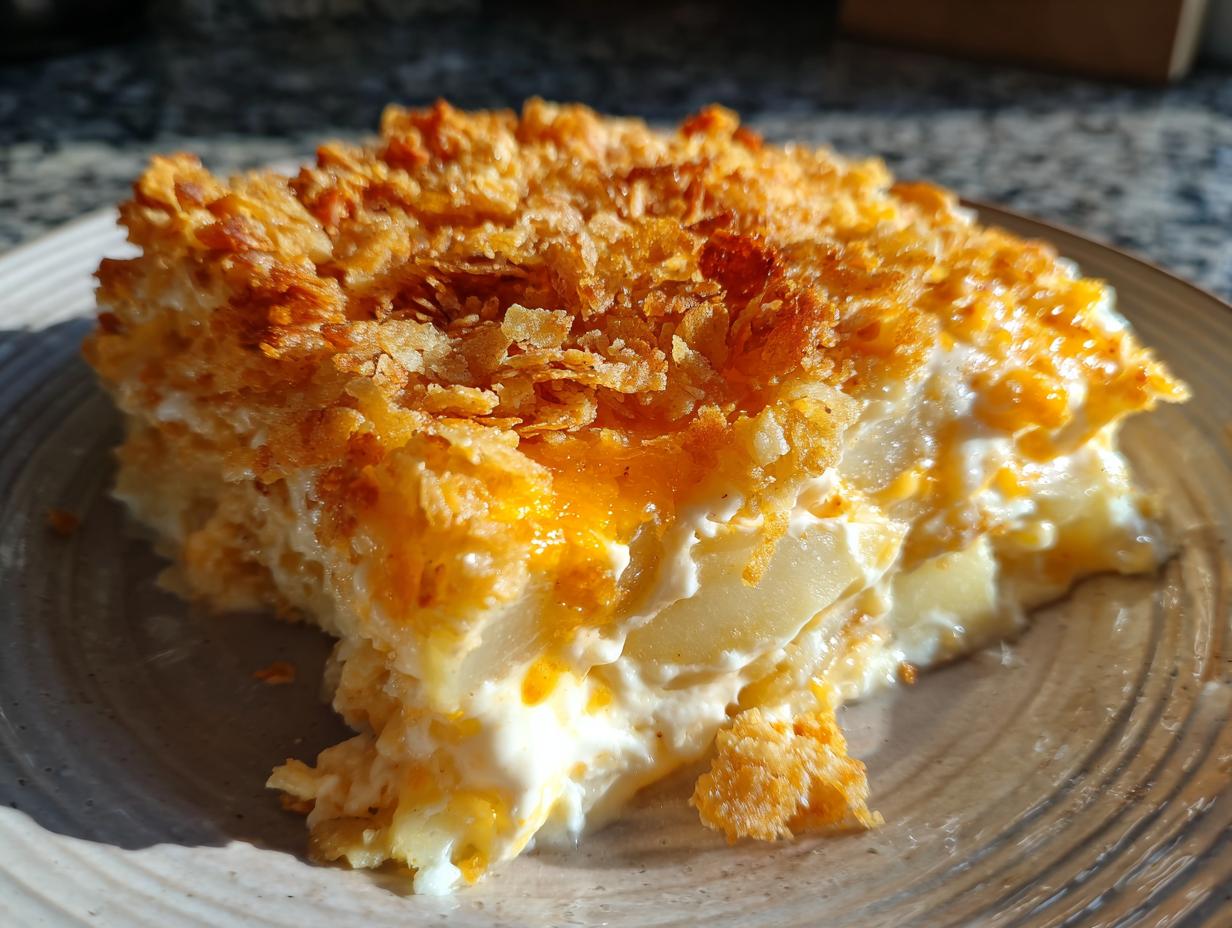
When the evening chill sets in, or when you realize everyone you love is descending upon your house for a holiday, there’s one thing that just *has* to be on the menu: serious comfort food. For me, that means digging deep into my Midwest roots to make the most magnificent, unbeatable potato casserole. Forget dry, sad sides; I’m talking about the Ultimate Creamy Cheesy Potato Casserole.
When I left the city and started Misty Plate, my goal was to bring the grounding joy of my grandmother’s kitchen into modern life. This very recipe is the result—it’s hearty, it’s unbelievably cheesy, and it feeds an army, making it perfect for potlucks or Christmas dinner. Trust me, this creamy bake is simple to assemble but tastes like you’ve been stirring it all day. It’s going to become your ultimate family favorite side dish. You can read more about my culinary journey right here on our story page.
- Why This Creamy Potato Casserole Is Your New Favorite Comfort Food Side Dish
- Gathering Ingredients for the Best Potato Casserole
- Step-by-Step Instructions for Your Cheesy Potato Casserole
- Tips for Success with This Easy Casserole Recipe
- Variations: Creating a Loaded Potato Casserole or Holiday Potato Bake
- Serving Suggestions for Your Hearty Potato Side Dish
- Storing and Reheating Your Potato Casserole
- Frequently Asked Questions About This Potato Casserole
- Nutritional Estimates for This Creamy Potato Bake
Why This Creamy Potato Casserole Is Your New Favorite Comfort Food Side Dish
When you need a side dish that truly satisfies that craving for rich comfort, this is the one. I’ve tweaked this recipe countless times to make sure it hits all those essential markers for big family meals. Why should you trust this version of potato casserole?
- It’s unbelievably gooey—that cheese blend is non-negotiable!
- It’s forgiving. If you’re busy, you can assemble it early without worry (see more below about making it ahead!).
- It tastes like a holiday, even if it’s just a Tuesday dinner! Need more easy ideas for busy nights? Check out my go-to list here.
Texture Goals: Gooey Cheesy Potatoes Every Time
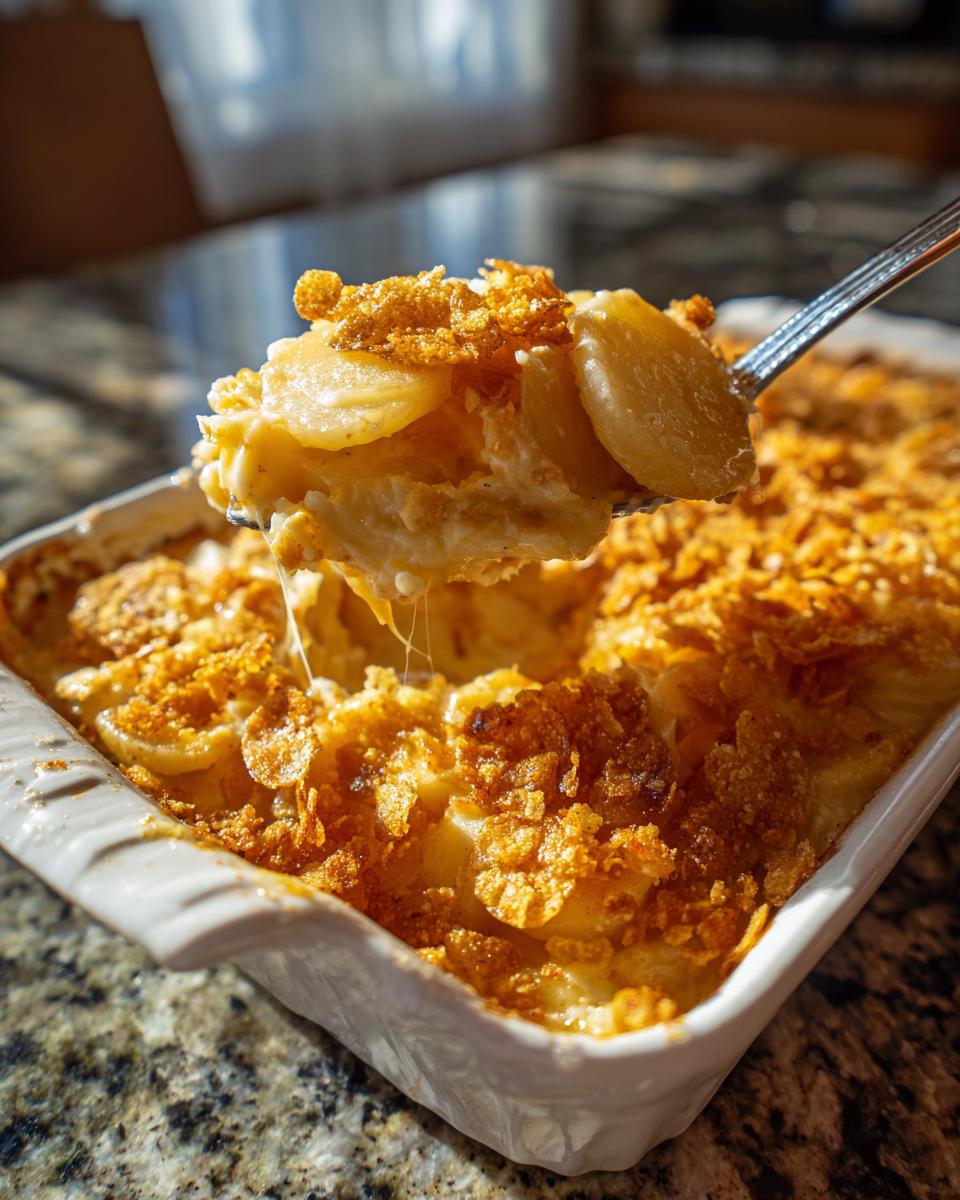
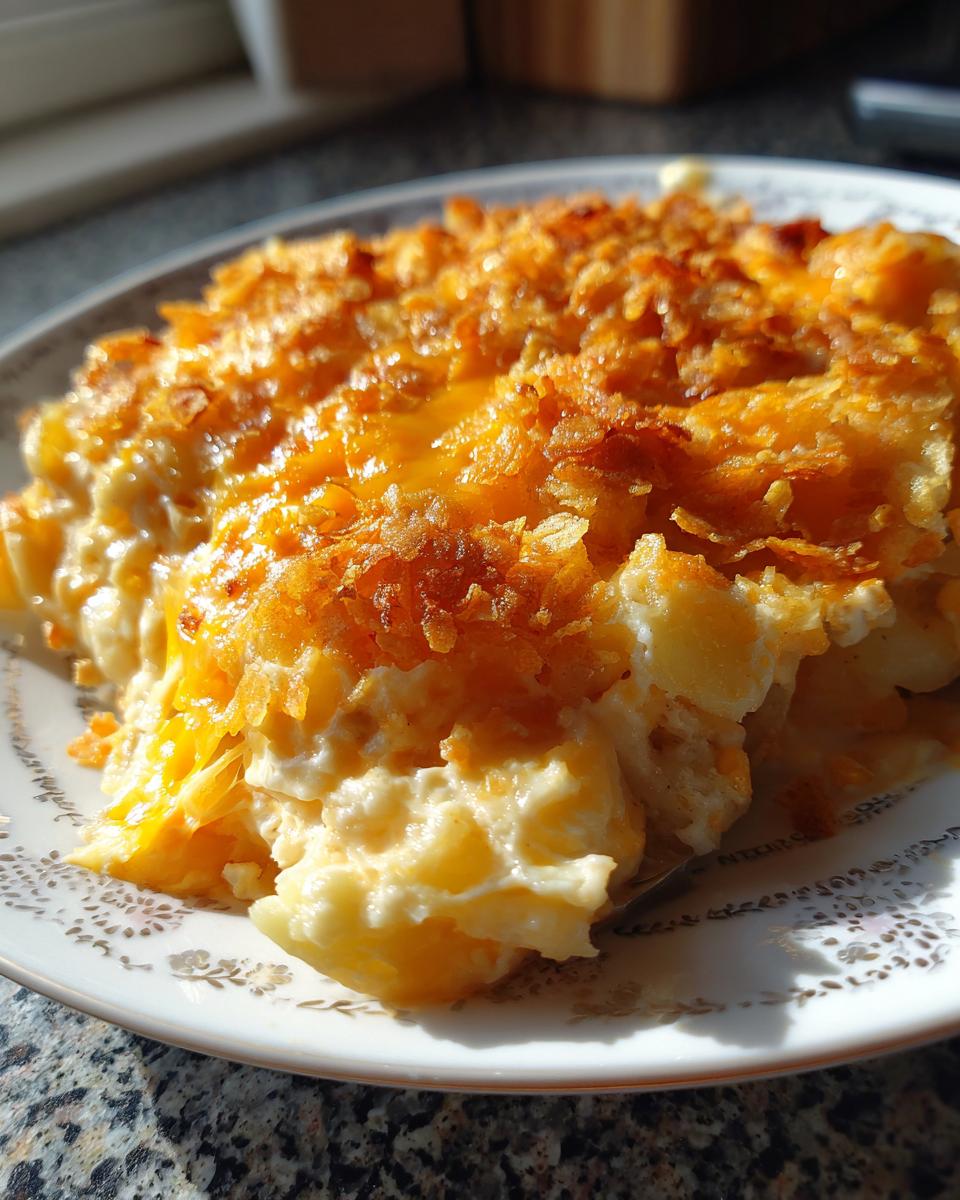
Honestly, a good potato bake needs to be luxurious. We aren’t going for dry or stiff here! The magic relies on that sauce made from cream of chicken soup and sour cream, plus the double dose of sharp cheddar and Monterey Jack. It melts down into every slice, creating those perfect, irresistible pools of gooey cheesy potatoes.
Potluck Ready Casserole: Simple Assembly for Large Groups
If I’m bringing a dish to a church supper or a family gathering, it has to travel well. This is a true Potluck Ready Casserole. You can mix it, put it in the pan, cover it, and just pop it in the oven when you get there. Less stress for me means more time enjoying the party!
Gathering Ingredients for the Best Potato Casserole
Okay, let’s talk supplies! This is the part where you gather your treasures. Remember, great comfort food starts with loving what goes into it. You don’t need a ton of fancy items for this incredible potato casserole, but clarity on what you grab makes all the difference when assembling.
I’ve broken down exactly what you need below. If you ever run out of cream of chicken soup, I have a great recipe for making your own from scratch—you can check that out when you have a little extra time!
- 3 lbs russet potatoes, peeled and thinly sliced
- 1 cup shredded sharp cheddar cheese
- 1/2 cup shredded Monterey Jack cheese
- 1/2 cup sour cream
- 1 (10.5 oz) can condensed cream of chicken soup
- 1/2 cup milk
- 1/4 cup unsalted butter, melted
- 1/2 teaspoon garlic powder
- 1/2 teaspoon onion powder
- 1/2 teaspoon salt
- 1/4 teaspoon black pepper
- 1 cup crushed cornflakes (for topping)
- 2 tablespoons melted butter (for topping)
Make sure those potatoes are sliced thin! That’s how we get that soft, layered texture that just melts in your mouth. Don’t skip that second tablespoon of butter for the topping, either—that’s what gives you a nice golden crunch!
Step-by-Step Instructions for Your Cheesy Potato Casserole
Now for the fun part! Turning those beautiful, prepped ingredients into that magnificent, bubbling potato casserole we all dream about. I always put on some music while I do this; baking this side dish should feel relaxing, not rushed. Always start by getting your oven ready to go. If you’re looking for hearty breakfast mains to go with your leftover bake, I have some fun easy breakfast recipes, too!
- First things first: Preheat your oven to 375 degrees Fahrenheit. Grab a standard 9×13 inch baking dish and give it a light coating with butter or cooking spray so nothing sticks later.
- We create the sauce foundation next. In your biggest mixing bowl—the one you used to toss the potatoes earlier is perfect—combine the sour cream, that can of condensed cream of chicken soup, milk, the first batch of melted butter (the 1/4 cup one!), garlic powder, onion powder, salt, and pepper.
- Take your whisk or wooden spoon and mix this all up really well. You want this sauce smooth as silk before you add anything else.
- Now, add those thinly sliced potatoes and half of your shredded cheddar cheese into that smooth sauce. Gently toss everything! I stress gently. We don’t want to break up the slices or turn this into mush yet. Just coat those potatoes thoroughly.
- Pour that beautiful mixture into your prepared dish. Make sure it’s spread out evenly; you want every scoop to be equal.
- Time for more cheese! Sprinkle the remaining cheddar cheese over the top, and then scatter all of that Monterey Jack cheese evenly across the surface.
- For the crunchy crown, take your crushed cornflakes and mix them with the remaining 2 tablespoons of melted butter in a small bowl. Distribute this buttery topping over the cheese layer. This is what gives you that perfect golden shield.
- Bake for a good 50 to 60 minutes. You’ll know it’s done when you can easily pierce a potato slice with a fork tip, and the topping is gloriously golden and bubbling away at the edges.
- The hardest—and most important—step: let it rest! Pull your potato casserole out and let it sit on the counter for a solid 10 minutes before you serve it. This short rest lets the sauce settle so you can scoop neat helpings instead of just soup.
Preparing the Creamy Sauce Base
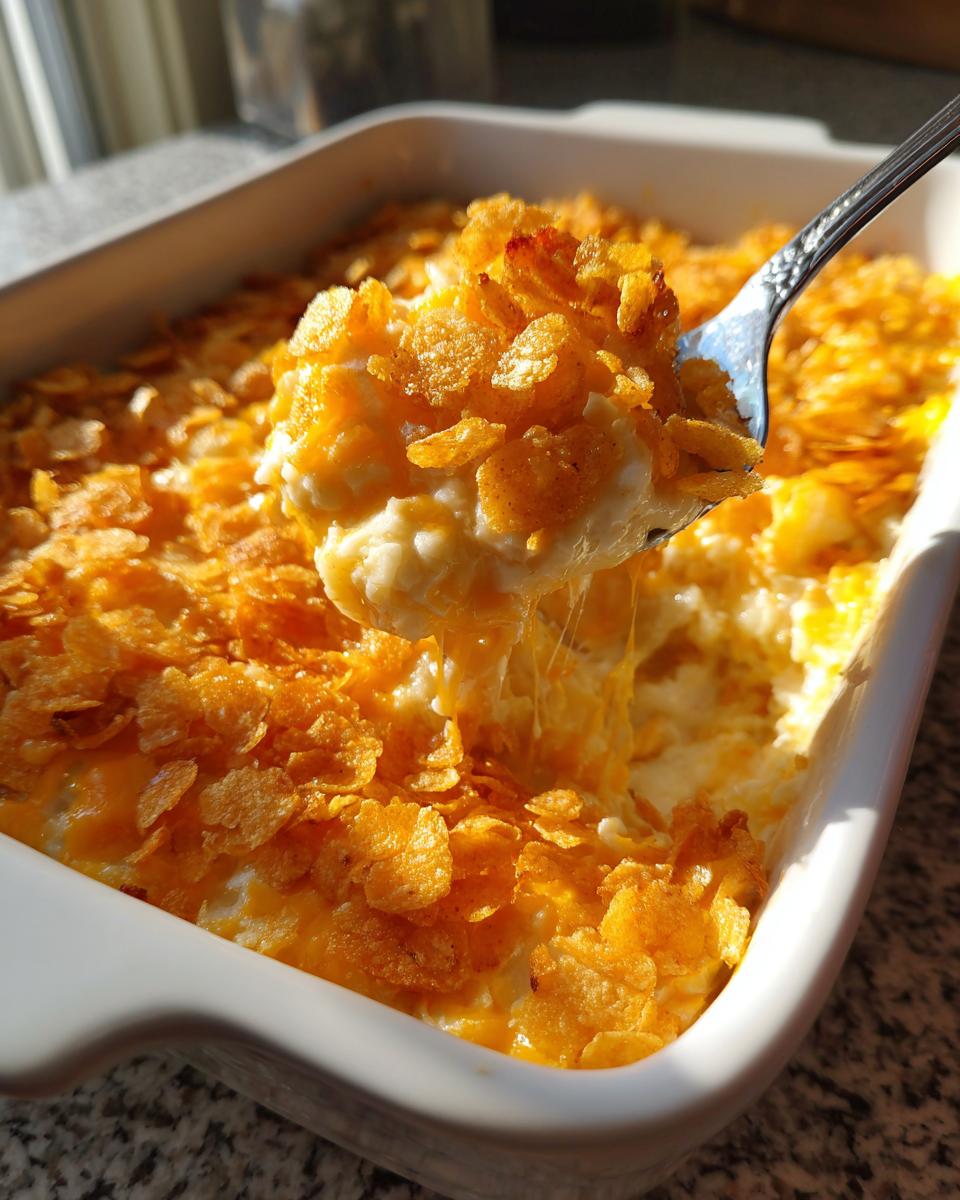
This sauce is the soul of the dish, so we treat it kindly. Use a sturdy bowl, because you’re going to be stirring against the thickness of the sour cream and soup! Once you mix the sour cream, soup, milk, and all those seasonings—the garlic and onion powder give it that classic baked potato flavor, by the way—you absolutely must mix it until it looks smooth. If you see streaks of sour cream hanging around, keep stirring, honey!
Layering and Topping the Potato Casserole
When you add the potatoes to the sauce, remember: half the cheddar goes in with the potatoes to melt *into* the layers, giving you that internal gooeyness. The second half of the cheddar and all the Jack go proudly on top to create the foundational cheese crust. Then, you finish it off with those buttered cornflakes. That little bit of butter makes the flakes toast up perfectly instead of just drying out. It’s a small thing that makes a huge difference in texture!
Tips for Success with This Easy Casserole Recipe
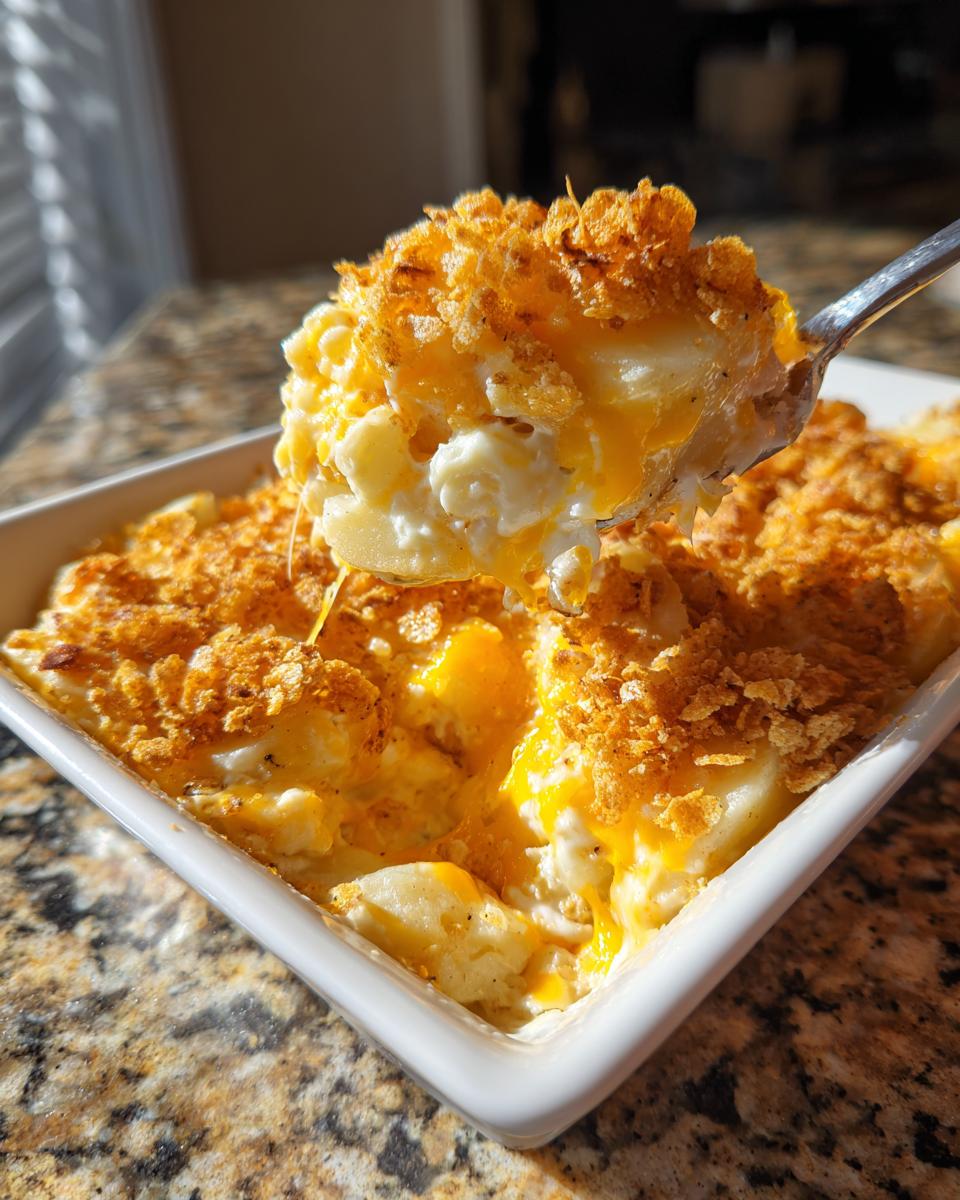
Listen, I know life gets hectic, especially when you’re cooking for big events. That’s why I’m so thrilled about how versatile this recipe is. It checks every box for an Easy Casserole Recipe—simple ingredients, big payoff—and it’s built to handle a busy schedule. Getting this right means less stress on Thanksgiving morning, and more time relaxing with a cup of coffee. If you need a quick, satisfying main dish idea for another night, I have a fantastic skillet recipe for easy chicken and green beans that always works fast!
Make Ahead Casserole Instructions
This is arguably the best part! If you want to get ahead, this potato casserole is your friend. You can assemble the whole thing—potatoes coated in sauce, cheese layered, topping sprinkled on—cover it tightly with plastic wrap, and stick it in the fridge. I usually do this up to 24 hours before I need it. Just remember this crucial swap: when you go to bake it straight from the fridge, you need to add about 10 to 15 extra minutes to that original bake time. That extra time gives it the juice to heat all the way through evenly.
Adapting Your Potato Casserole: Hash Browns vs. Sliced
Sometimes I just don’t have time to peel and thinly slice three pounds of potatoes, and that’s okay! If you want to speed things up and lean into that creamy, hash brown style that everyone loves (hello, Funeral Potatoes Recipe!), you can absolutely swap them out. Just use two standard 32-ounce bags of frozen hash browns. The key here is that you must thaw them first, and then really squeeze out as much excess water as you possibly can. Drain them well, toss them into your sauce, and because they are already partially cooked, you can usually shave about 10 minutes off the total bake time compared to the fresh slices.
Variations: Creating a Loaded Potato Casserole or Holiday Potato Bake
This beautiful base potato casserole is wonderful all on its own, but honestly, sometimes you just need a little more excitement on your plate, right? That’s where we get creative! If you’re looking to truly elevate this dish for a special event, like the big Thanksgiving spread or a special family dinner, these adaptations are simple texturing swaps that make a huge difference.
One of my absolute favorite ways to dress this up is turning it into a Loaded Potato Casserole. Think about everything you love about a loaded baked potato—but in a scoopable, cheesy dish! I usually do this right when I’m mixing the potatoes with the creamy sauce in Step 4. I stir in about one full cup of cooked, crumbled bacon. Yes, real bacon—it adds that salty, smoky depth that just screams richness.
Along with the bacon, you absolutely must add some fresh herbs. Chopped fresh chives are my go-to. They give a lovely little oniony punch and a gorgeous hint of green color that breaks up all that delicious beige and gold. I toss in about two tablespoons along with the bacon and cheese before it goes into the oven. It transforms the entire profile!
If you’re aiming for that showstopper feel—maybe for a big holiday party where everyone is eyeing the serving dishes—this adaptation works perfectly. It becomes a true Holiday Potato Bake that tastes like it took hours of complicated layering. But you know the secret: it was just a few handfuls of bacon and herbs thrown in!
Speaking of loading things up, if you happen to love that creamy, heavy soup flavor but want a completely different vibe, I have a recipe for a rich, creamy loaded baked potato soup that uses similar flavor profiles, just in liquid form! If you want another great loaded version, I always recommend checking out this great take on the loaded casserole from my friend over at Keto Cook Journal: Loaded Baked Potato Casserole. Happy mixing!
Serving Suggestions for Your Hearty Potato Side Dish
So, you’ve got this glorious, bubbling, cheesy masterpiece ready to go. It’s the definition of a Hearty Potato Side Dish, and because it’s so rich, you need the right partners on the plate to keep everything balanced! I’ve learned that a heavy side needs something bright or lean to keep the whole meal feeling complete.
When I serve this potato casserole, I usually pair it with leaner proteins. It cuts right through the creamy fat beautifully. Think about a simple glazed ham—the sweetness of the glaze contrasts wonderfully with the savory cheese. If we’re doing Thanksgiving, this side dish always sits next to a perfectly roasted turkey breast.
Because this casserole is so decadent, I always add something green and fresh. If you are looking for an amazing contrast, you absolutely need a crisp salad. I often make my Fall Harvest Salad when this is on the menu because the apples and vinaigrette are the perfect counterpoint to the gooey potatoes. It just cleanses the palate between bites!
A few other quick ideas that pair well when you’re serving this crowd-pleaser:
- Simple Balsamic-Glazed Meatloaf: The tanginess works wonders against the dairy.
- Roasted Chicken with Herbs: Keep the chicken seasoning light and bright.
- Steamed Green Beans with Lemon Zest: No heavy sauces needed here; keep the vegetable side snappy.
Remember, the goal here is to let the potato casserole shine as the star comfort element, supported by flavors that keep the whole plate interesting!
Storing and Reheating Your Potato Casserole
One of the best things about a massive, rich potato casserole is that you almost always have leftovers—and trust me, leftovers are often even better the next day once everything has really settled in! I’ve tested every way to save this dish because nobody wants to serve up a sad, sweaty slab of potatoes later on. If you follow these simple steps, your leftovers will taste almost as good as the first batch.
For basic storage, you need an airtight container. If you have leftovers piled up in the original dish, the best thing to do is let the casserole cool down on the counter for about an hour—don’t put boiling hot food straight into the fridge, that’s just asking for trouble. Once it’s cooled slightly, cover that 9×13 pan tightly with plastic wrap and then maybe foil over that. You can safely keep this in the refrigerator for up to four days. It freezes beautifully too: wrap the cooled casserole tightly in plastic wrap, then foil, and it’s good for about two months.
When it’s time to reheat, you have options, but I strongly prefer the oven method if you can swing it. The microwave is fast, but reheating in the microwave tends to make the potatoes a little rubbery and dries out the crunchy topping instantly.
For the best texture recovery, opt for the oven:
- Place the casserole in a 350-degree oven.
- Cover it loosely with foil—we want to trap the steam to rehydrate the potatoes but prevent the top from burning.
- Heat until the center is piping hot, usually about 20 to 30 minutes, depending on how big a slice you took.
If you simply must use the microwave because you’re starving or only reheating a small portion, cover the dish loosely with a damp paper towel before microwaving it in short bursts until hot. That damp towel helps steam the potatoes slightly so they don’t get too tough. If you tried freezing it, make sure to thaw it in the fridge overnight before reheating in the oven using the covered method above! If you have any questions at all about storing or saving recipes, feel free to reach out to me via my contact page—I love hearing from fellow home cooks!
Frequently Asked Questions About This Potato Casserole
I know when you’re planning a big meal, details matter! Even with a straightforward recipe like this comforting potato casserole, people always have great questions about substitutions and making sure the texture is absolutely perfect. Below, I’ve tackled the most common things I hear about turning simple spuds into this amazing side dish.
I always tell people, treating this like any great Oven Baked Potato Dish means knowing your ingredients. If you’re still curious after reading these, don’t hesitate to check out our story page again to see where my philosophy on simple cooking comes from! You can find that right here.
Can I use heavy cream instead of milk in this potato casserole?
Oh, you totally can! If you want to turn this up to an 11 on the richness scale, substituting the milk with heavy cream is a fantastic move. Just know that using heavy cream in place of the milk is going to make your final Creamy Potato Bake even thicker and more decadent. Because the cream of chicken soup already provides a good amount of richness, you might find the bake solidifies a touch more, but the taste will be heavenly and ultra-luxurious. It leans closer to a very rich, cheesy scalloped potato texture.
What is the difference between this and Funeral Potatoes Recipe?
That’s a great question, especially since both dishes are the ultimate potluck champions! The main difference lies in the potato preparation. What most people call the classic Funeral Potatoes Recipe almost always calls for using frozen, pre-shredded hash browns. It’s fantastic, fast, and yields a specific, slightly softer texture because the potatoes are already partially cooked.
My recipe, while sharing that glorious creamy, cheesy sauce, focuses on Russet potatoes that are freshly peeled and thinly sliced. Slicing them right before we cook them gives you those defined, tender layers that still hold their shape a bit better after baking. Think of mine as a slightly more structured, layered version compared to the soft, uniform texture of the traditional hash brown version. Both are incredible, but I prefer the definition I get from the fresh slices in this specific potato casserole!
Nutritional Estimates for This Creamy Potato Bake
When we talk about comfort food side dishes, we know they aren’t exactly health food stars, but that’s okay! Sometimes you just need that dose of cheesy, savory goodness, especially when feeding a crowd for a holiday. I always want you to know exactly what you’re working with when you serve up my Creamy Potato Bake.
Please keep in mind that because this recipe uses standard ingredients but allows for variations—like adding bacon or using cream cheese—these numbers are just estimates based on the core ingredient list provided in the recipe cards. No fancy measuring here, just a good ballpark figure for you!
Here is a breakdown of the estimated nutrition facts for one serving of this delicious potato casserole:
- Serving Size: 1 serving
- Calories: 410
- Fat: 25g
- Saturated Fat: 14g
- Carbohydrates: 38g
- Fiber: 3g
- Protein: 11g
- Sugar: 4g
- Sodium: 580mg
- Cholesterol: 55mg
See? It’s rich and satisfying, just like a great homemade side dish should be! If you’re ever concerned about the details of how we handle information on the site, you can always review our privacy policy. Enjoy every single cheesy bite!
PrintUltimate Creamy Cheesy Potato Casserole for Holidays and Potlucks

This recipe delivers the ultimate comfort food side dish: a creamy, cheesy potato casserole. It uses simple ingredients to create a rich, gooey texture perfect for feeding a crowd at holidays or potlucks.
- Prep Time: 20 min
- Cook Time: 60 min
- Total Time: 80 min
- Yield: 8 servings 1x
- Category: Side Dish
- Method: Baking
- Cuisine: American
- Diet: Vegetarian
Ingredients
- 3 lbs russet potatoes, peeled and thinly sliced
- 1 cup shredded sharp cheddar cheese
- 1/2 cup shredded Monterey Jack cheese
- 1/2 cup sour cream
- 1 (10.5 oz) can condensed cream of chicken soup
- 1/2 cup milk
- 1/4 cup unsalted butter, melted
- 1/2 teaspoon garlic powder
- 1/2 teaspoon onion powder
- 1/2 teaspoon salt
- 1/4 teaspoon black pepper
- 1 cup crushed cornflakes (for topping)
- 2 tablespoons melted butter (for topping)
Instructions
- Preheat your oven to 375 degrees Fahrenheit. Lightly grease a 9×13 inch baking dish.
- In a large bowl, combine the sour cream, cream of chicken soup, milk, 1/4 cup melted butter, garlic powder, onion powder, salt, and pepper. Mix until the sauce is smooth.
- Add the sliced potatoes and half of the shredded cheddar cheese to the sauce mixture. Gently toss everything together until the potatoes are evenly coated.
- Pour the potato mixture into the prepared baking dish, spreading it into an even layer.
- Sprinkle the remaining half of the cheddar cheese and all of the Monterey Jack cheese over the top of the potatoes.
- In a small bowl, mix the crushed cornflakes with the 2 tablespoons of melted butter. Sprinkle this mixture evenly over the cheese layer to create a crispy topping.
- Bake for 50 to 60 minutes, or until the potatoes are tender when pierced with a fork and the topping is golden brown and bubbly.
- Let the casserole rest for 10 minutes before serving. This helps the casserole set up for easier scooping.
Notes
- For a ‘Loaded Potato Casserole’ variation, stir in 1 cup of cooked, crumbled bacon and 2 tablespoons of chopped fresh chives into the potato mixture before baking.
- If you prefer using frozen hash browns (like in Funeral Potatoes), substitute the 3 lbs of fresh potatoes with two 32-ounce bags of frozen, thawed, and drained hash browns. Reduce the baking time slightly.
- You can assemble this entire casserole, cover it, and refrigerate it up to 24 hours ahead of time. Add 10-15 minutes to the baking time if cooking directly from the refrigerator.
Nutrition
- Serving Size: 1 serving
- Calories: 410
- Sugar: 4
- Sodium: 580
- Fat: 25
- Saturated Fat: 14
- Unsaturated Fat: 11
- Trans Fat: 0.5
- Carbohydrates: 38
- Fiber: 3
- Protein: 11
- Cholesterol: 55