


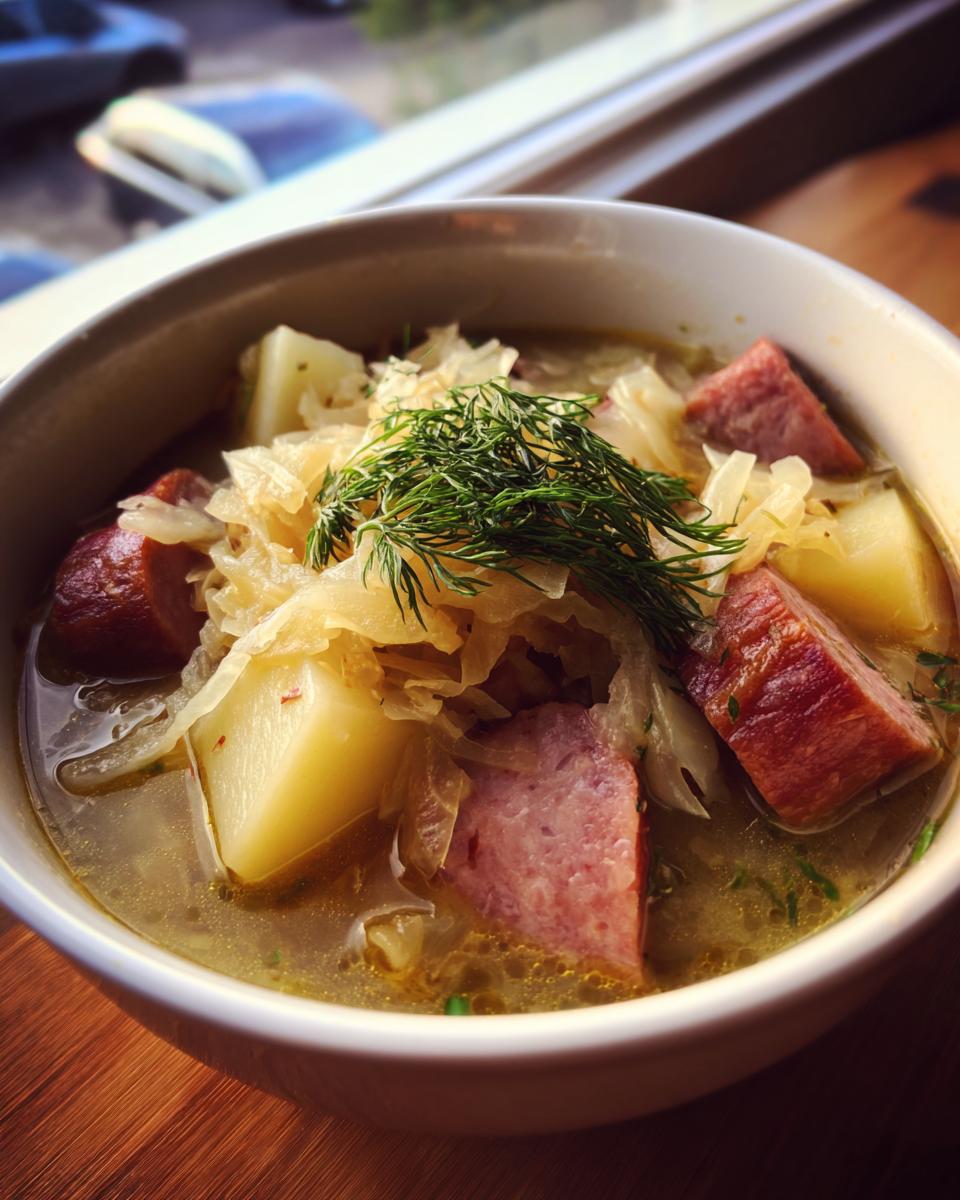
When the cold really sinks in, you need something sturdy in your bowl, right? Forget those light, fussy lunchtime soups. What we crave during those frosty nights is true **comfort food soup** that feels like a hug from the inside out. That’s why I’m sharing my go-to recipe for **sauerkraut soup** – it’s the absolute definition of a Winter Warmer Meal. When I found myself burning out in the city, it was returning to simple, grounding foods like this Polish Kapusniak that brought me back to myself. This isn’t just any soup; it’s an authentic Polish masterpiece that perfectly marries the deep, smoky savoriness of kielbasa with the bright, necessary tang of good sauerkraut. Trust me, you’ll want to keep this recipe right by your side.
- Why This Hearty Sauerkraut Soup is Your New Favorite Comfort Food Soup
- Gathering Ingredients for Authentic Polish Sauerkraut Soup
- Step-by-Step Instructions for Making Robust Winter Stews
- Tips for Success with Your Potato Soup with Sauerkraut
- Authentic Soup Variations for Your Sauerkraut Soup
- Storage and Reheating Instructions for This Cozy Dinner Idea
- Frequently Asked Questions About Sauerkraut Soup
- Serving Suggestions for This Best Sauerkraut Soup
- Estimated Nutritional Data for Kapusniak
Why This Hearty Sauerkraut Soup is Your New Favorite Comfort Food Soup
When I talk about Eastern European cooking, I’m talking about meals made to sustain you through a long winter. You’ll want to ditch those complicated recipes for this Kapusniak because it delivers maximum flavor with minimum fuss. It’s become a staple in my kitchen because it checks every box when I need a satisfying meal that doesn’t keep me chained to the stove.
- This is truly a **One Pot Soup Dinner** masterpiece! After we brown the sausage, everything goes into the same pot. Cleanup? A breeze. You get all that deep, developed flavor without scrubbing multiple pans later.
- It’s powerfully satisfying. This isn’t a light broth; the potatoes and smoky kielbasa make it hearty enough to stand on its own. It transitions perfectly from a cold-weather dinner to leftovers you look forward to the next day.
- You get that beautiful, necessary tang. We aren’t hiding the sauerkraut here; we’re celebrating it! The fermented cabbage cuts right through the richness of the sausage and broth, keeping the whole thing bright and exciting, which is crucial for a good sauerkraut soup.
- It respects tradition while fitting modern life. This genuine **Eastern European Recipe** brings true, rustic flavor to your table, but the whole thing comes together in about an hour. That’s a win-win I can stand behind!
Gathering Ingredients for Authentic Polish Sauerkraut Soup
Okay, let’s chat about what you need for this amazing Kapusniak. Because this is such a **Hearty Soup Recipe**, every component really sings, so try to get good quality stuff where you can. Don’t panic if you don’t have everything; cooking is about adapting, but for the *authentic* experience, these are the players you want in your kitchen.
The star, of course, is the sauerkraut itself. It’s crucial that you drain it well before it hits the pot! If you find your sauerkraut is aggressively sour—maybe it’s homemade or just really fresh—I sometimes give it a quick rinse under cold water. But keep that liquid! That tangy juice is liquid gold for boosting the flavor later on if you want to lean into that traditional taste.
Next up is the meat. We absolutely need smoked kielbasa for this. That smokiness is the foundation of the flavor profile we’re aiming for in this **Kielbasa Soup Recipe**. Slice it up into nice half-moons so you get good browning action when we start cooking. For the rest of the veggies, standard chopping applies: onion, carrots, and celery—the flavor trinity! Make sure your potatoes are peeled and cubed to about the same size so they cook evenly.
For liquids, standard chicken or vegetable broth works perfectly, but if you’re feeling that deep, robust flavor, don’t skimp! We are also adding a few key herbs to make it taste old-world: dried marjoram is non-negotiable for that Polish feel, and caraway seeds are optional, but they give a lovely earthy lift to the **savory fermented cabbage recipes**.
When everything is prepped, you won’t be far from having a pot bubbling away on the stove. You can find the full measurements in the recipe card, but just know that getting your mise en place ready makes the 45 minutes of cook time completely peaceful. This is the kind of simple prep that leads to the best comfort food soup!

Step-by-Step Instructions for Making Robust Winter Stews
Alright, let’s get this beautiful soup going! This process is simple because we build the flavor right from the first minute. Since we’re aiming for that deep, savory base, we spend a little time on the first couple of steps, and the rest is hands-off simmering. Don’t rush the browning; that rendered fat is where the magic starts. Once we get the liquid in there, it transforms into the cozy **sauerkraut soup** we’re dreaming of.
Searing the Kielbasa and Sautéing Aromatics
First up, grab your biggest, heaviest pot—I always use my Dutch oven for things like this. Get your olive oil warm, and then toss in that sliced kielbasa. We want to cook it until those little moons get beautifully golden brown. Pull them out with a slotted spoon and set them aside; leave that flavorful fat behind! Next, toss in your chopped onion, carrots, and celery. Let those cook down until they start smelling sweet and softening up, which takes about eight minutes. Seriously, stop and smell that—this is the flavor base for our **sauerkraut soup**!
Simmering the Hearty Soup Recipes Base
Now we dump everything else that needs cooking time right in there! Add your minced garlic for just a minute until you can smell it, then toss in the drained sauerkraut, the cubed potatoes, your broth, water, marjoram, bay leaf, and those optional caraway seeds. Give it a good stir, bring it up to a boil, and then immediately drop the heat down low. Cover it loosely and let that simmer for about 20 minutes. You are waiting until those potatoes feel soft when you poke them with a fork.

Finishing and Serving Your Traditional Soup Recipes
Once the potatoes are tender, it’s time to bring the good stuff back: add that browned kielbasa right back into the pot. Let it all hang out for five more minutes, just to heat the sausage through. Before you serve up this amazing Traditional Soup Recipe, you have to yank out and toss that bay leaf—we don’t want anyone biting into that! Taste the soup. Now, be careful with the salt here; the sausage and sauerkraut bring a lot of sodium! If you feel like it needs to be richer (and honestly, sometimes I do!), swirl in a splash of heavy cream at the very end, but don’t let it boil again. Ladle it out generously and finish with a sprinkle of fresh, bright dill. That’s it. Perfection!
Tips for Success with Your Potato Soup with Sauerkraut
I know that sauerkraut can be a bit intimidating if you’re new to using it, but mastering its flavor is the secret weapon for making the best sauerkraut soup. The acidity is powerful, and a little adjustment goes a very long way in balancing out this rich, smoky soup. Remember, cooking is all about tasting as you go—that’s how you build confidence in the kitchen!
My biggest piece of advice here relates to the sauerkraut’s punch. If you taste your broth after the initial 20-minute simmer (before you add the sausage back in) and you think, “Wow, this is a little too tangy for me today,” don’t panic! You absolutely have the option to rinse the sauerkraut lightly before you put it into the pot. It takes away some of that sharp, raw fermentation flavor, leaving you perfectly positioned to enjoy a gentler, but still wonderfully tangy, **Potato Soup with Sauerkraut**.
However, if you want that deep, historic Eastern European flavor—the one that makes your belly instantly happy—don’t rinse it! Instead, utilize that reserved liquid. If you want to intensify the savoriness, use some of the reserved sauerkraut brine instead of plain water or broth when you start simmering. Just pour in half the required water/broth and then top it off with the brine. Trust me on this; it adds layers you just can’t get anywhere else. It makes this dish a fantastic example of how to manage **savory fermented cabbage recipes** beautifully.
When it comes to building flavor, don’t be afraid to look at swaps, especially if you aren’t using kielbasa. While the recipe calls for kielbasa, for a deeper, heartier result—something closer to a robust stew—try swapping half of it out for smoked pork shoulder or even a couple of strips of thick-cut bacon. Cook the bacon or pork first, render that fat, and then proceed with sautéing your onions and carrots right in that flavor bomb. It makes for an incredible cozy dinner idea that tastes like it cooked all day long.
And one last thing: if you are making this ahead of time, know that it gets better overnight. The flavors meld beautifully! If you find it’s slightly *too* thick when you reheat it the next day, just stir in a splash of water or extra broth until it reaches the perfect soup consistency again.
Authentic Soup Variations for Your Sauerkraut Soup
One of the things I love most about Eastern European cooking is how adaptable these foundational recipes are. While my main focus here is on the wonderful Polish Kapusniak, people often ask me how to tweak it if they’re leaning more towards a German style, or if they didn’t have kielbasa on hand. The beauty of this **sauerkraut soup** base is that it truly welcomes slight variations!
If you’re aiming for something even more robust, closer to a German sauerkraut soup feel, the easiest change is your choice of meat. As I mentioned before, swapping out *half* the kielbasa for some thick-cut smoked bacon or cubed, smoked pork shoulder totally shifts the profile. Cook that bacon or pork first and use that fat—oh my goodness, that renders out some serious flavor!
To push it slightly away from Poland and toward Germany, sometimes folks like to use a touch of caraway seeds *and* maybe a tiny pinch of dried mustard powder when they add the marjoram. It gives the soup a slightly earthier, less herbaceous edge. You’ll still have a fantastic, tangy soup, but it hits just a little differently on the palate.
If you’re looking to make this recipe much lighter—perhaps focusing on it as a **Tangy Vegetable Soup** while leaning into the sauerkraut’s natural flavor—you can skip the meat entirely! Just double up on your potatoes and carrots, and maybe add a handful of lentils or white beans during the long simmer. It becomes a wonderfully hearty vegetarian option, though you lose some of that deep smoky anchor. It just proves how versatile a good cup of fermented cabbage can be in a hearty soup recipe!
Ultimately, whether you stick strictly to the Kapusniak style or borrow from your German neighbors, the key is balancing that savory depth with that unmistakable sauerkraut tang. Have fun experimenting; these are old-world recipes built for home cooks!
Storage and Reheating Instructions for This Cozy Dinner Idea
One of the joys of making a really robust soup like this Kapusniak—which truly shines as a cozy dinner idea—is knowing you have fantastic leftovers waiting for you. Honestly, I think this **sauerkraut soup** tastes even better on the second day. When it sits overnight, all those complex flavors—the smoke from the sausage, the earthiness of the marjoram, and the tang of the cabbage—really marry together into something magical.
Storing it is straightforward. Once the soup has cooled down completely to room temperature (and please, let it cool first before you seal the container!), move it into an airtight container. I prefer glass containers for soup because they don’t hold onto lingering odors, but any good, tight-sealing container works great. You can keep this hearty soup in the refrigerator for a solid four to five days.
When it’s time to reheat, I always recommend doing it slowly on the stovetop. Transfer the amount you want to eat into a saucepan over medium-low heat. Give it a gentle stir every few minutes. If it seems a little thick—which happens as the potatoes absorb liquid overnight—just stir in a small splash of water or extra broth until it loosens up again to that perfect soup consistency. You don’t want to boil it hard, just bring it up to a gentle, comforting simmer.

If you are really pressed for time, the microwave works, too! Just make sure you use a microwave-safe bowl and heat it slowly in short bursts (say, 60 seconds at a time), stirring in between, until it’s steaming hot throughout. This way, you get that same hearty, warming flavor without sacrificing any of the texture we worked so hard to create!
Frequently Asked Questions About Sauerkraut Soup
I always get so many questions when I share recipes that cross cultural lines or use ingredients like fermented cabbage! It’s only natural, right? You want to make sure you get that perfect, authentic flavor without any guesswork. Here are a few things people ask me most often about this Kapusniak, your favorite new **Comfort Food Soup**.
Is this recipe German Sauerkraut Soup or Polish Kapusniak?
That’s a great question! Technically, this specific version, featuring that beautiful balance of smoked kielbasa, potatoes, and marjoram, is our take on traditional Polish Kapusniak. German variations definitely exist—often they lean slightly heavier on mustard or caraway, or sometimes use different cuts of pork—but the core concept of using tangy fermented cabbage in a robust broth is shared across Eastern Europe. Whichever name you use, you get that deeply satisfying, rich flavor profile that makes for incredible **Traditional Soup Recipes**.
Can I turn this into a vegetarian soup?
You absolutely can! While the smoked kielbasa brings such a wonderful anchor to the dish, it’s not strictly necessary if you’re looking for a **Tangy Vegetable Soup**. To keep the hearty texture, I’d suggest increasing the potato volume slightly and definitely adding a good handful of lentils or maybe some white beans along with the broth. You’ll also want to punch up the savory factor by maybe adding a dash of smoked paprika (not hot, just smoked!) when you sauté the vegetables. That will mimic some of that smoky depth the sausage leaves behind.
How do I handle the sauerkraut liquid?
This is where people get nervous! The liquid that comes with your sauerkraut, often called brine, is potent and full of tang. If your sauerkraut seems mild or you want a really sharp, assertive **sauerkraut soup**, use some of that reserved liquid instead of plain water when you start simmering. If you prefer a milder taste—or if you’re worried about sodium—simply drain the cabbage well and use plain broth or water. I promise, even if you rinse the cabbage, enough of that unique flavor comes through. It’s a hallmark of great **Savory Fermented Cabbage Recipes**!
Can I make this ahead of time, and how do I store leftovers?
Yes, yes, and yes! I actually *prefer* eating this the next day. The flavors just settle in so nicely. Store any leftovers in an airtight container in the fridge for up to four days. When you reheat it, just keep it on low on the stovetop—don’t let it violently boil. If it thickens up too much during storage (which the potatoes will probably cause!), just thin it back out with a little ladle of fresh broth or water until it’s back to that perfect soup consistency. It makes for the easiest Easy Weeknight Soup!
Serving Suggestions for This Best Sauerkraut Soup
Now that you’ve got a steaming hot, deeply flavored pot of Kapusniak ready—the best **sauerkraut soup** you’ll ever make, if I do say so myself—you might be wondering what to serve alongside it. Because this soup is so robust and hearty, you don’t need much else to call it a complete meal, but bread is non-negotiable in my book! We want something to sop up that incredible broth.
My absolute first choice, especially if I’ve had a busy week and relied on some shortcuts, is simple, dense, dark rye bread. The slight bitterness and earthiness of the rye stand up so beautifully against the tang of the soup. It’s the perfect counterpoint. If you happen to have been baking recently, I have a recipe for sourdough discard rolls that are phenomenal for dunking. They get a little crusty on the outside but stay soft enough to soak up all that savory liquid.
If you really feel like you need a green element on the table to round out the meal, keep the salad simple! Don’t bring anything too delicate or fussy here. A very simple green salad with a sharp vinegar-based dressing—think red wine vinaigrette—is perfect. The acid in the dressing mirrors the bright flavor of the sauerkraut and keeps things from feeling too heavy after eating all that sausage and potato.
Finally, for a true traditional touch, a dollop of full-fat sour cream right on top when serving makes everything taste a little richer and slightly smoother. It’s heaven against that smoky flavor. So grab your thickest bowl, a hunk of good bread, and dive into your very own bowl of homemade comfort!
Estimated Nutritional Data for Kapusniak
Now that we’ve made this incredible, hearty bowl of Kapusniak, I want to give you a quick peek at what’s inside. Remember, as Ava Sinclair says over at Misty Plate, these numbers are just estimates! What you put in—especially if you splurge on fatty kielbasa or decide to add that rich heavy cream—will change the final tally.
These figures are based on the standard recipe ingredients provided, without the optional heavy cream added. If you decide to make additions or use different brands of sausage, treat this data as a helpful guide rather than a strict promise. This recipe leans toward being a filling meal, so naturally, the sodium reflects the use of broth and preserved cabbage, so keep that in mind!
Here is an approximation of what you’re looking at when you ladle out a bowl of this **sauerkraut soup**:
- Serving Size: 1 bowl
- Calories: 350
- Fat: 18g
- Saturated Fat: 7g
- Carbohydrates: 30g
- Fiber: 5g
- Protein: 18g
- Sodium: 750mg
- Sugar: 6g
It’s a fantastic balance of protein and carbs to keep you full, which is exactly what you want out of your **Winter Warmer Meals**! If you’re counting macros, you can always look up specific tracking for leaner sausages or skip the optional cream to lower the fat content further. I try not to worry too much about things like this when I’m enjoying genuine, grounding food like this Kapusniak; the flavor is what matters most to me when I’m cooking for connection. If you were looking for something strictly lighter, maybe check out these easy protein balls for a snack later!
PrintHearty & Authentic Polish Kapusniak (Sauerkraut Soup) with Smoked Kielbasa

Make this satisfying, one-pot Polish Sauerkraut Soup, Kapusniak, featuring smoky kielbasa and potatoes. It is a comforting meal perfect for chilly evenings that uses simple ingredients for deep, warming flavor.
- Prep Time: 15 min
- Cook Time: 45 min
- Total Time: 60 min
- Yield: 6 servings 1x
- Category: Dinner
- Method: Stovetop
- Cuisine: Polish
- Diet: Vegetarian
Ingredients
- 1 tablespoon olive oil
- 1 pound smoked kielbasa sausage, sliced into half-moons
- 1 large yellow onion, chopped
- 2 carrots, peeled and diced
- 2 celery stalks, diced
- 3 cloves garlic, minced
- 1 pound potatoes, peeled and cubed (about 2 medium)
- 3 cups sauerkraut, drained (reserve the liquid)
- 6 cups low-sodium chicken or vegetable broth
- 1 cup water
- 1 teaspoon dried marjoram
- 1 bay leaf
- 1/2 teaspoon caraway seeds (optional)
- Salt and black pepper to taste
- 1/4 cup heavy cream or sour cream (optional, for finishing)
- Fresh dill, chopped (for garnish)
Instructions
- Heat the olive oil in a large Dutch oven or heavy-bottomed pot over medium heat. Add the sliced kielbasa and cook until lightly browned on both sides, about 5 to 7 minutes. Remove the sausage with a slotted spoon and set aside, leaving the rendered fat in the pot.
- Add the chopped onion, carrots, and celery to the pot. Cook, stirring occasionally, until the vegetables soften, about 8 minutes.
- Add the minced garlic and cook for 1 minute more until fragrant.
- Stir in the drained sauerkraut, cubed potatoes, broth, water, marjoram, bay leaf, and caraway seeds, if using.
- Bring the soup to a boil, then reduce the heat to low, cover, and simmer for 20 minutes, or until the potatoes are tender.
- Return the browned kielbasa to the pot. Continue to simmer, uncovered, for another 5 minutes to heat the sausage through.
- Remove and discard the bay leaf. Taste the soup and season with salt and pepper as needed. Remember that sauerkraut and broth already contain sodium.
- If you desire a richer soup, stir in the heavy cream or sour cream during the last minute of cooking. Do not boil after adding cream.
- Ladle the hearty soup into bowls. Garnish each serving with fresh chopped dill.
Notes
- If your sauerkraut seems very sour, rinse it lightly under cold water before adding it to the pot. If you prefer a tangier flavor, use the reserved sauerkraut liquid instead of some of the water or broth.
- For a more robust flavor, substitute smoked pork shoulder or bacon for half of the kielbasa. Cook the pork/bacon first and proceed with the recipe.
- This soup tastes even better the next day, making it excellent for meal prepping or cozy dinner leftovers.
Nutrition
- Serving Size: 1 bowl
- Calories: 350
- Sugar: 6
- Sodium: 750
- Fat: 18
- Saturated Fat: 7
- Unsaturated Fat: 11
- Trans Fat: 0
- Carbohydrates: 30
- Fiber: 5
- Protein: 18
- Cholesterol: 45