

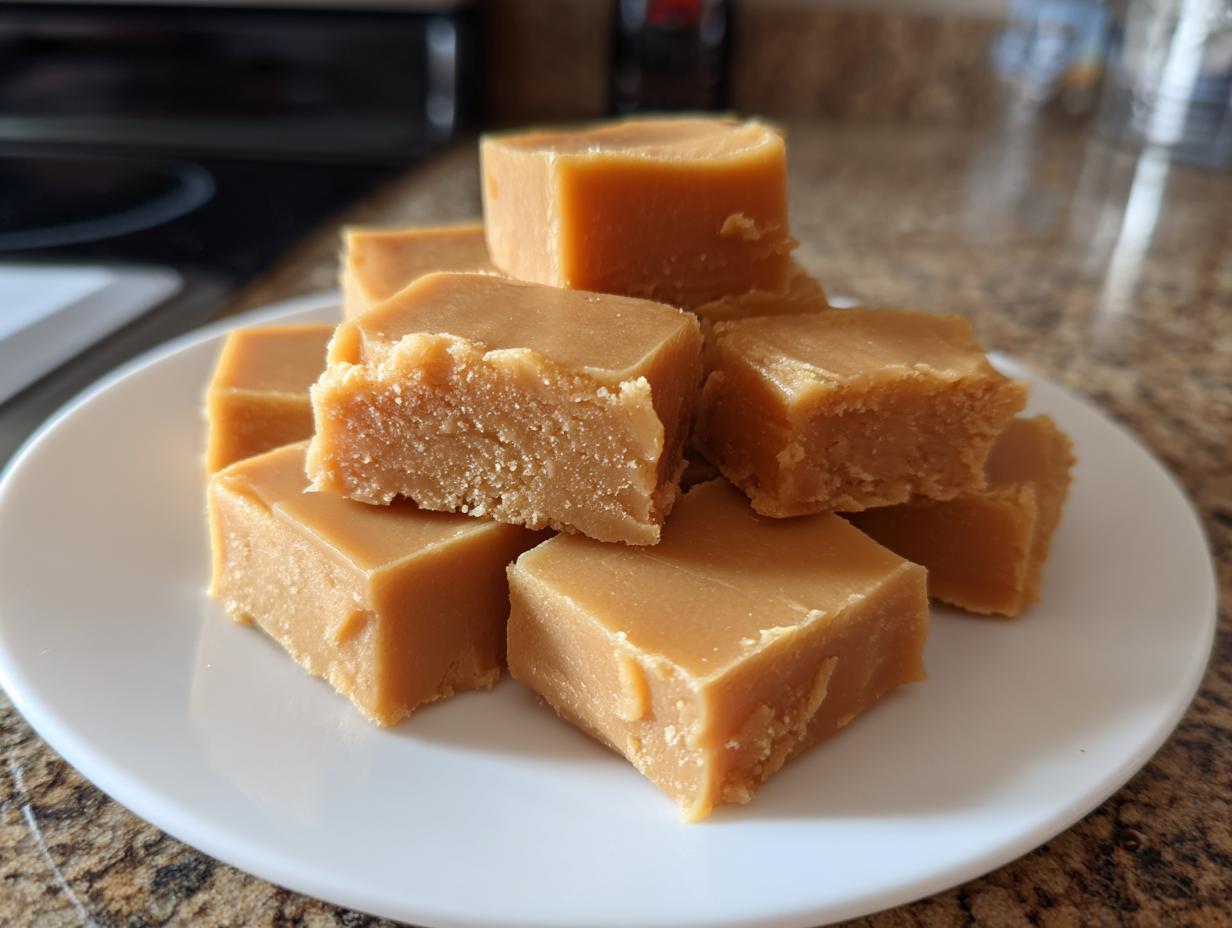
There’s just something about old-fashioned candy that pulls you right back to childhood, isn’t there? Forget those overly complicated chocolate bars; my heart belongs to the sweet, decadent simplicity of Penuche Fudge. This isn’t just another sugar recipe; this is the ultimate, reliable penuche fudge that stays gorgeously creamy every single time. I’m Ava Sinclair, and after years of feeling disconnected in the city, rediscovering these simple, honest recipes from my Midwest roots has become my sanctuary. If you’re looking for easy inspiration during the week, you should check out my favorites for weeknight dinner ideas. Trust me when I say this old-fashioned fudge skips the dreaded graininess by focusing on perfect timing. It’s pure, melt-in-your-mouth magic!
- Why This Old-Fashioned Penuche Fudge Recipe Works (Texture Perfect Fudge)
- Ingredients for Classic Penuche Fudge (Brown Sugar Fudge)
- Essential Equipment for Making Penuche Fudge
- How to Prepare Your Penuche Fudge Instructions
- Ingredient Notes and Substitutions for Caramel Flavored Candy
- Tips for Success with Penuche Fudge
- Storage and Serving Suggestions for Your Penuche Fudge
- Frequently Asked Questions About Old Fashioned Fudge
- Nutritional Estimates for This Classic Dessert
Why This Old-Fashioned Penuche Fudge Recipe Works (Texture Perfect Fudge)
I tried so many batches of what I thought was penuche fudge that ended up gritty, and honestly, it’s heartbreaking when that happens! You want that glorious, smooth, melt in your mouth candy experience, not something crunchy. The difference between a spectacular batch and a ruined one always comes down to a couple of non-negotiable steps. When I first started making this brown sugar fudge, everything changed when I learned that patience in the cooling stage is just as important as stirring over the heat.
This technique locks in that texture perfect fudge consistency that everyone raves about. I remember thinking I could speed it up that first time by taking a break from beating it outside in the winter air—nope, instant texture disaster!
Achieving Creamy Fudge Without Graininess
The secret to defeating graininess lies squarely in the thermometer reading. We are aiming for 234 degrees Fahrenheit—that’s the official soft-ball stage for this confection. Once you hit it, pull it right off the heat! But here’s the essential part: you must let that mixture cool, completely undisturbed, until it dips down to exactly 110 degrees Fahrenheit. You cannot rush this period. It allows the sugar crystals to get tiny and set up correctly before you introduce all that air during the beating phase. Skip the cooling, and you skip the creaminess!
Ingredients for Classic Penuche Fudge (Brown Sugar Fudge)
People trust me because I don’t skip steps, and here, the ingredients are the foundation for perfect penuche fudge. Since this is a true brown sugar fudge, you need to make sure you’re using high-quality dairy and packed brown sugar for that rich caramel depth. I always measure my cream precisely because too much liquid throws off the candy’s structure entirely. For easy reference, I’m putting the full ingredient list below, but don’t forget to see how I whip up my honey butter when I need a simple sweet spread!
- 2 cups granulated sugar
- 1 cup packed light brown sugar
- 1 cup heavy cream
- 1 tablespoon butter
- 1 teaspoon vanilla extract
Essential Equipment for Making Penuche Fudge
You can’t achieve that perfect texture if you’re using the wrong tools, right? Making old fashioned fudge like this is all about precision, especially concerning the heat, so don’t just eyeball it! Having the right setup makes the whole process feel easy, even though we are dealing with candy making.
Make sure you have these items ready before you even think about turning on the burner. Being prepared stops you from scrambling later when the mixture gets hot!
- A heavy-bottomed saucepan is a must. This helps distribute the heat evenly so you don’t scorch the sugars on the bottom—nobody wants burnt caramel flavor!
- A reliable candy thermometer. Seriously, this is non-negotiable for hitting that soft-ball stage correctly. Don’t even try to guess!
- An 8×8 inch pan. This gives you the perfect depth for squares that are thick enough to be satisfying but not so thick they take forever to cool down.
- Parchment paper. You’ll want this to line the whole pan with an overhang. Trust me, trying to pry sweet buttery dessert squares out of a bare metal pan is a nightmare you don’t need.
How to Prepare Your Penuche Fudge Instructions
Alright, this is where the real magic happens for your penuche fudge. Don’t let the candy thermometer scare you—if we follow these cues together, you can absolutely nail this beautiful, caramel-flavored confection. You’ll want to make sure you have time for the cooling step, but honestly, the actual hands-on time is super fast! If you’re looking for quick meals while you wait for things to set, check out my easy breakfast recipes.
Cooking the Brown Sugar Fudge Base
First things first: get that 8×8 pan lined with parchment paper so it hangs over the sides. That’s your handle for lifting it out later! Now, combine the granulated sugar, that lovely light brown sugar, and the heavy cream right into your heavy-bottomed saucepan. Heat this over medium heat, giving it a good stir until the sugars seem completely dissolved. Then, you attach that candy thermometer—no cheating on this step! Keep cooking, stirring just occasionally now, until that thermometer hits precisely 234 degrees Fahrenheit. The second it hits that number, yank it off the burner! Stir in your pat of butter and the vanilla until the butter has vanished completely into the hot mixture.
The Crucial Cooling and Beating Phase for Creamy Fudge
This next part is the making or breaking point for creamy fudge, so listen closely. You have to let the mixture cool down naturally, without touching it, until it reads 110 degrees Fahrenheit. Resist the urge to poke it or move it! Once it hits that 110 mark, that’s when you beat it. I use a sturdy wooden spoon, but an electric mixer on medium speed works wonders too. You need to beat it hard—I mean vigorously—for about five to ten minutes. You’ll know you’re done when the whole mixture stops looking shiny and starts looking matte, thickening up like pudding.
Setting and Cutting Your Homemade Candy
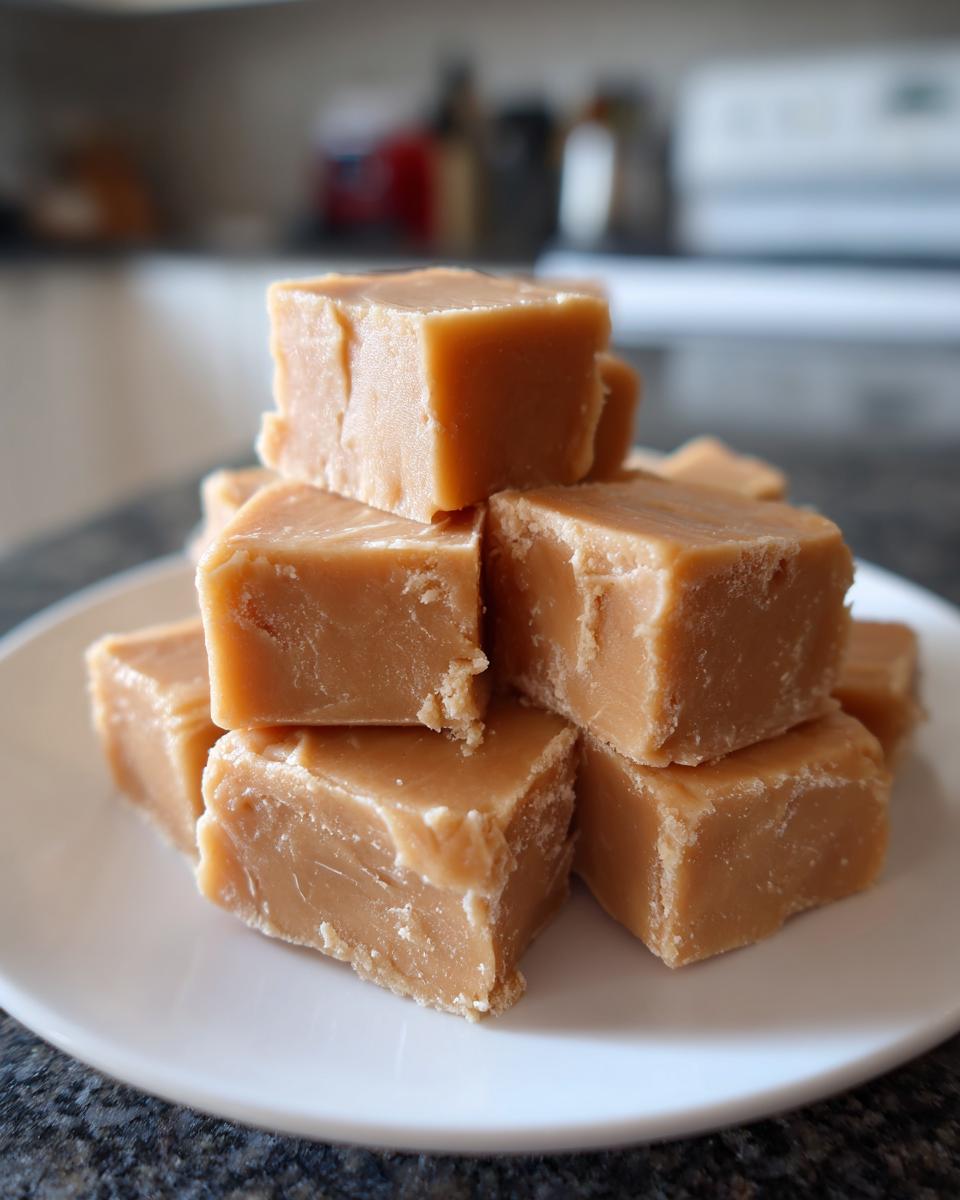
Once it thickens and holds its shape slightly when you lift the spoon, stop immediately! Quickly scoop that thickened goodness into your prepared pan and spread it out the best you can—it gets stiff fast. Let this homemade candy set up completely at room temperature. Chilling it speeds things up, but letting it sit calmly at room temperature usually gives the absolute best set. Once it’s firm, use those parchment overhangs to lift it out, and slice it into nostalgic squares!
Ingredient Notes and Substitutions for Caramel Flavored Candy
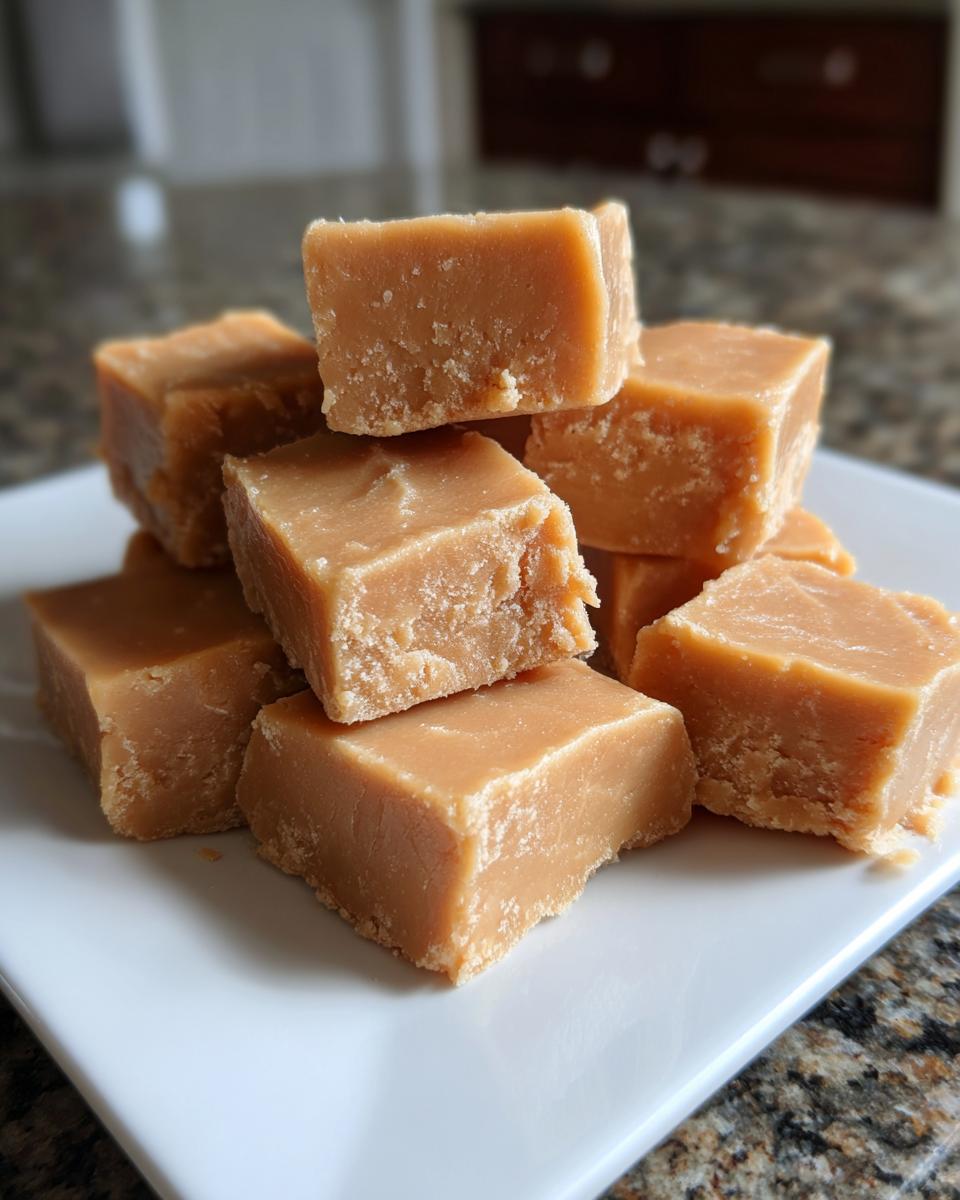
I get asked all the time if you can swap out the sugars here, especially since this is such a beautiful caramel flavored candy without using actual caramel. Here’s the deal: you absolutely must use light brown sugar. Dark brown sugar has too much molasses, and it’ll push the flavor and the cooking temperature way off track. Stick to light brown sugar for the perfect creamy result. If you happen to have some pecans or walnuts lying around, this is the one place I allow a little deviation from the pure recipe. You can fold in about a half cup of toasted nuts right before you beat the mixture if you want a little crunch, even though we are proudly keeping this a no chocolate fudge recipe!
Remember, the richness comes from that brown sugar and that heavy cream. If you’re ever curious about other creamy favorites, my recipe for creamy white pizza sauce shares that same attention to dairy quality!
Tips for Success with Penuche Fudge
Making candy sounds scary, I know it does, but honestly, once you respect the temperature, this brown sugar fudge is incredibly forgiving. To make sure you feel completely confident delivering that perfect, smooth batch, I always share a few little secrets I’ve picked up over the years. These aren’t in the main instructions because they are the troubleshooting guidelines I use when things feel wonky! If you need a distraction while waiting for things to chill, I’ve got some great quick, healthy lunch ideas to look at.
Here are the bits of advice that keep my fudge consistently delicious:
- The Pan Matters: You absolutely need a heavy-bottomed saucepan. If you use a thin-walled pot, the bottom layer of sugar will scorch before the top layer even warms up properly. That burnt speck sinks to the bottom and ruins the clean, buttery taste of the entire batch.
- Don’t Touch While Cooling: Seriously, walk away for those twenty or thirty minutes it takes to drop from 234°F down to 110°F. If you move the pan, stir it, or even just breathe heavily near it, you risk initiating crystallization too early, and that’s what gives you that grainy texture we are desperately trying to avoid.
- What If I Overbeat It? If you keep beating that fudge mixture and it starts to look too stiff—almost like concrete in the pot—you’ve gone a few minutes too long! Quickly add just a teaspoon of hot water or cream and stir gently one last time to try and loosen it up before pouring. It might be a touch less smooth, but it’ll still taste yummy!
- The Thermometer Check: If your thermometer is sticking weirdly or you think it’s off, you can test it by flicking a drop of the hot mixture into a glass of ice water. If it forms a soft, pliable ball that you can mold between your fingers (but it dissolves immediately when you press it), you’re in that soft-ball zone you need!
Storage and Serving Suggestions for Your Penuche Fudge
You’ve made it! You have the perfect batch of penuche fudge, and now we need to keep that magnificent texture locked in. Since this is an old fashioned fudge, you don’t need to mess around with refrigeration, which is great because cold fudge can sometimes get a little hard. Just store your squares in a truly airtight container at cool room temperature. If your kitchen is super warm, maybe aim for a cool cabinet, but generally, they hold up beautifully for a week, maybe even longer!
This rich sweet buttery dessert is wonderful on its own, but it truly sings when paired with something a little tart to cut through all that glorious brown sugar sweetness. I love setting out a platter of these during the holidays alongside a crisp, spiced drink. You simply must try making a batch of my apple cider Moscow Mule recipe when you serve these—the ginger and apple are just divine with the vanilla and caramel notes of the fudge.
Frequently Asked Questions About Old Fashioned Fudge
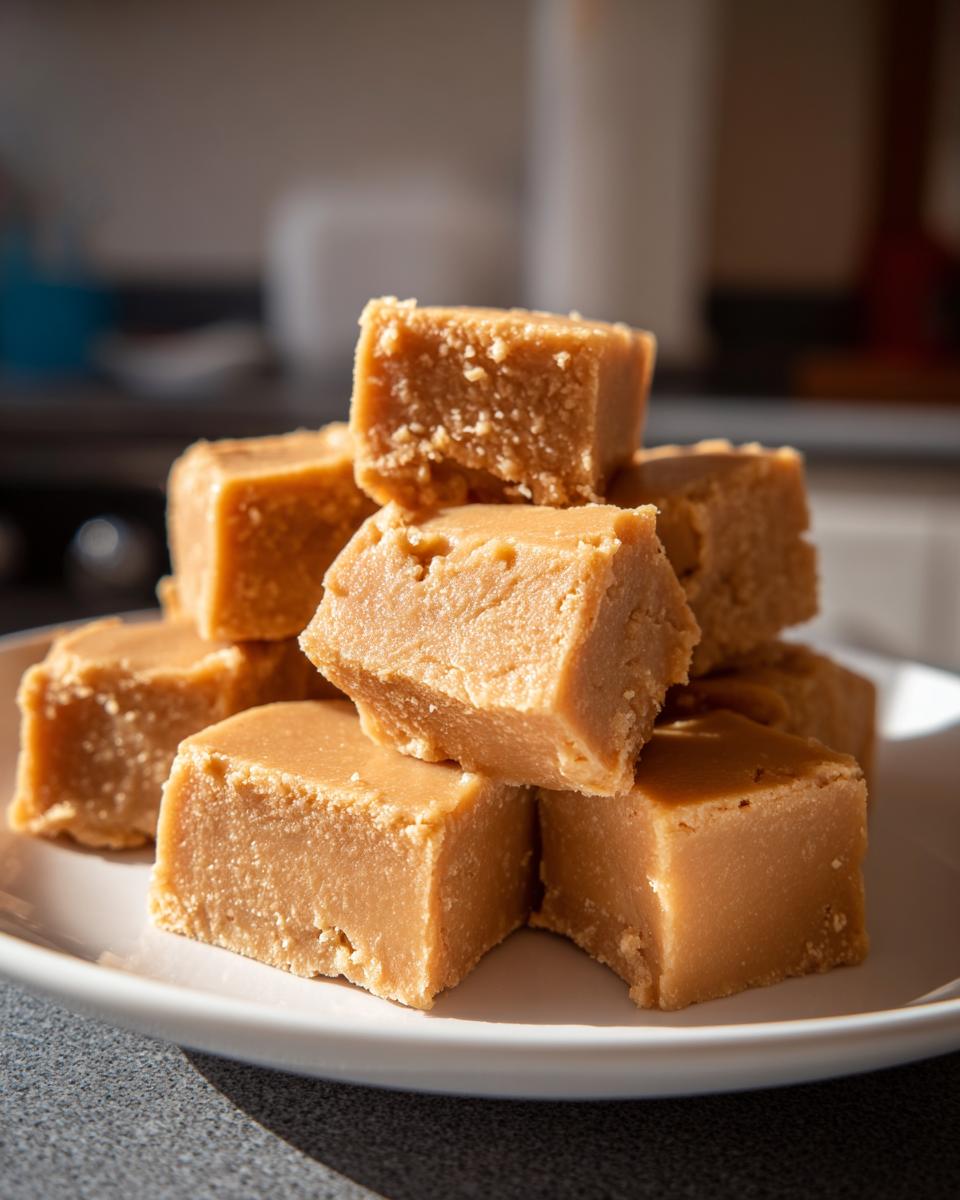
I know when you’re making homemade candy for the first time, you have a million questions buzzing around. People often ask about speed, substitutions, and what exactly makes this a classic treat versus a standard chocolate version. I’ve gathered the most common ones here to make sure your first batch of holiday fudge turns out perfectly smooth!
Can I substitute white sugar for brown sugar in penuche fudge?
Oh, please don’t try this! You really can’t swap out the brown sugar here. If you use only white sugar, it stops being penuche fudge and actually becomes a different type of candy altogether—it won’t have that gorgeous, deep caramel flavor or the necessary molasses content that helps keep the final texture so creamy. The brown sugar is non-negotiable for achieving that classic, melt-in-your-mouth result.
Is this considered a quick fudge recipe?
This is a tricky one! If we look purely at the active time—the time you are standing over the stove stirring or actively beating the mixture—then yes, it’s quite fast, making it great for an easy fudge recipe. Prep and cooking combined is usually under 30 minutes max. However, remember that candy-making requires that mandatory cooling period down to 110°F before you beat it, and then setting time after that. So while the hands-on part is quick, it isn’t a truly quick fudge recipe if you need it ready in an hour total. Plan ahead for at least two hours for cooling and setting!
How do I make sure this is a true no chocolate fudge?
That’s the beauty of penuche! It is naturally a no chocolate fudge recipe, which is why it shines! It relies entirely on the caramelized flavor of the cooked brown sugar combined with the vanilla and butter. If you’re looking for some easy snacks while you wait for your main course prep, take a peek at my suggestions for simple appetizers and snacks!
Can I double the recipe?
You certainly can double it! But I really caution you against it unless you have a HUGE, very heavy pot. When you’re cooking sugar mixtures to a high temperature, doubling the volume can cause inconsistent heating, meaning the edges might burn before the center reaches the correct soft-ball stage. If you do double it, you absolutely must use a larger, heavier pot than you think you need and watch that thermometer like a hawk!
Nutritional Estimates for This Classic Dessert
Since this classic dessert is pure, sweet confectionary, I always keep the focus on the joy of the treat rather than the details! But, just so you have an idea of what you’re enjoying, here is a general breakdown per 1-ounce square, based on the recipe ingredients. Remember these are close estimates, not certified lab numbers, okay? Focus on the delicious factor!
- Calories: 145
- Fat: 4g (2.5g Saturated)
- Carbohydrates: 27g
- Protein: 1g
- Sugar: 25g
If you’re looking for more ideas that fit into a well-rounded meal plan, you can always check out my full lineup of dessert recipes. But for a special occasion, this fudge is always worth it!
PrintOld-Fashioned Penuche Fudge: Creamy Brown Sugar Candy Recipe
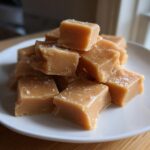
Make classic Penuche fudge with rich caramel flavor. This old-fashioned candy is easy to make and yields creamy, melt-in-your-mouth squares perfect for gifting.
- Prep Time: 15 min
- Cook Time: 15 min
- Total Time: 2 hours 30 min
- Yield: 36 squares 1x
- Category: Dessert
- Method: Stovetop Cooking
- Cuisine: American
- Diet: Vegetarian
Ingredients
- 2 cups granulated sugar
- 1 cup packed light brown sugar
- 1 cup heavy cream
- 1 tablespoon butter
- 1 teaspoon vanilla extract
Instructions
- Line an 8×8 inch pan with parchment paper, leaving an overhang for easy removal. Lightly grease the paper.
- Combine the granulated sugar, brown sugar, and heavy cream in a heavy-bottomed saucepan.
- Cook over medium heat, stirring constantly until the sugar dissolves.
- Attach a candy thermometer to the side of the pan. Continue to cook, stirring occasionally, until the mixture reaches 234 degrees Fahrenheit (soft-ball stage). This usually takes about 10 to 15 minutes.
- Remove the pan from the heat immediately. Stir in the butter and vanilla extract until the butter melts completely.
- Let the mixture cool undisturbed until it reaches 110 degrees Fahrenheit. Do not rush this cooling step; it is crucial for texture.
- Once cooled to 110 degrees Fahrenheit, begin beating the mixture vigorously with a wooden spoon or an electric mixer on medium speed.
- Continue beating until the fudge loses its glossy appearance, thickens significantly, and holds its shape when dropped from the spoon. This process takes about 5 to 10 minutes.
- Quickly pour the thickened fudge into the prepared pan. Spread evenly.
- Allow the Penuche fudge to set completely at room temperature for several hours, or chill briefly to speed setting.
- Cut into squares before serving. Store in an airtight container.
Notes
- For the smoothest texture, cool the candy mixture to exactly 110 degrees Fahrenheit before beating. This prevents graininess.
- If you want a slightly firmer candy, cook the mixture to 236 degrees Fahrenheit instead of 234 degrees Fahrenheit.
- This recipe is a classic brown sugar fudge; it does not contain chocolate.
Nutrition
- Serving Size: 1 square
- Calories: 145
- Sugar: 25
- Sodium: 25
- Fat: 4
- Saturated Fat: 2.5
- Unsaturated Fat: 1.5
- Trans Fat: 0
- Carbohydrates: 27
- Fiber: 0
- Protein: 1
- Cholesterol: 15